











The Mobile Service Manager is usually preinstalled on most Android devices. These applications run on Android 4.4 on certain carriers, including AT&T, T-Mobile, Verizon, and Vodafone. Many users are unaware of how and why such applications run on their smartphones and tablets, as they are enabled during setup.
This is locked into the carrier's OS, which is loaded during the factory reset. The boot loader does not remove it. Carriers allow apps to be installed on devices because they earn revenue from them. The publisher pays the carrier to run it on the user's device, as it is set up automatically on the mobile phone.
It came to light when tech support at call centres identified it on almost all Android-based devices after the Ingress app began appearing on them.
Ingress is the Pokémon Go game, and users mostly click on call centres out of curiosity. It was originally installed as DT Ignite and is now used solely for commercial purposes on the devices.
Users of such smartphones should know that they put the device at risk of attacks from other malware and viruses, and that these attacks may disrupt privacy agreements. This is because the app's creator may have used code that is vulnerable to online attacks.
Also, Mobile Service Managers may send spam notifications from other applications, using data collected when the apps are installed without the user's permission.
 What Is The Mobile Services Manager App?
The Mobile Services Manager App is preloaded on the Android phone, and no setup or upkeep is required to run it. It can run in the background over Wi-Fi and keep the mobile software up to date.
It is system-installed software that performs certain functions. It includes options for updating, access to information, and control settings. Some service providers may offer an uninstall option if the user no longer wants it.
Although it is part of the basic mobile setup, many users do not want it on their devices. One of the most common reasons is that it consumes significant storage space, and the system's advertisements can be repetitive and annoying. Also, the ads consume significant storage space and cellular data.
What Does The Mobile Services Manager Do?
Mobile services enable the transmission of interpersonal data, including conventional services such as wireless internet that connect to a local area network (LAN) or a wide area network (WAN).
It can be a mobile or PDA-based solution that helps managers Develop effective communication and marketing strategies. It differs from e-services in its greater mobility and in factors such as location awareness, time sensitivity, and personalisation.
The managers handle user information, useful activities, traffic, news, chat rooms, games, and entertainment-related user activities. They collect data that can be used to inform how to categorise users from a customer-centric perspective and to elevate user engagement through content, social settings, and consumption behaviour.
 What Is the Mobile Services Manager App On Android?
The Mobile Services Manager app downloads and installs applications without notifying users and without requesting permission. The downloaded apps are often sponsored by their creators, who pay the phone carrier for such downloads.
Experts advise users to turn it off once device setup is complete. If they do not, they can run unpermitted applications on the device. Turning it off does not affect it.
In addition, apps can run updates through it, and certain apps are updated automatically when opened.
Mobile Services Manager App Verizon
There are many different types of wireless data technologies. WSNs offer low-power, low-cost options for connecting users to collect, exchange, and act on data.
Cellular networks are designed for a city or a nation; they cover large geographic areas and support mobility from one access point to another.
Cellular network technologies include 2G, 3G, 4G, and 5G. Verizon's 4G LTE network covers over 98% of American users. It is a data-only network the company launched for 3G cell phones; later, voice calls were added over the data-only LTE network. It offers smartphones with different voice and data plans for multiple operating systems.
In 2015, it launched the 5G wireless network, and in 2016, it released the LTE Advanced series in the US markets. Finally, in April 2019, Verizon introduced the first commercial 5G smartphone service.
 Should I Disable The Mobile Services Manager?
Most users have different opinions on it. Many believe it hinders daily work and progress in the workplace. The main aim of creating such a program is to help the carrier and the app developer earn more.
-
It uses multiple marketing strategies, but is useless to the device's owner and should be removed immediately.
-
Many users want to know how much built-in programs can do on personal devices. For example, it can run in the background and slow down or use more data.
-
It is reinstalled whenever it is disabled; even when disabled, it still runs in the background, consuming system resources and data.
-
Carriers earn revenue from such built-in programs and should be prevented from approving updates that slow down the device's performance.
-
The preinstalled app should be disabled to restrict interference with the device's normal functioning.
-
It is a risky program that carriers should restrict. The local government should impose restrictions to turn it off.
-
On the device, the user can open Settings, then go to Apps or Application Manager. From there, they can select All, scroll down to Smart Manager, search for DT Ignite, and turn it off.
What Is a Mobile Manager App?

Mobile manager apps are data management tools that let users sync their phone with a PC to access its data and perform tasks such as copying, transferring, restoring, and other mobile management functions.
Network providers and administrators use mobile application management tools to install, remove, update, and audit applications on their devices.
The device managers focus on device activation, provisioning, enrollment, licensing, configuration, usage tracking, maintenance, and policy enforcement.
 Are Mobile Services Apps Harmful?
Mobile devices are equipped with web browsers, and companies are designing Smartphone-friendly sites to assist users. Apps provide various services, including instant messaging, WAP, location-based services, chat rooms, content rooms, and subscription-based news and communication services.
Media and cinema-based subscription services provide clear terms for when users can purchase access.
Mobile Service is operations management software that helps mobile workers stay connected and capture real-time data. For safe browsing, it is recommended not to install the app from unknown sources and to use browser extensions to block content.
What is DT Ignite & Why You Should Delete It?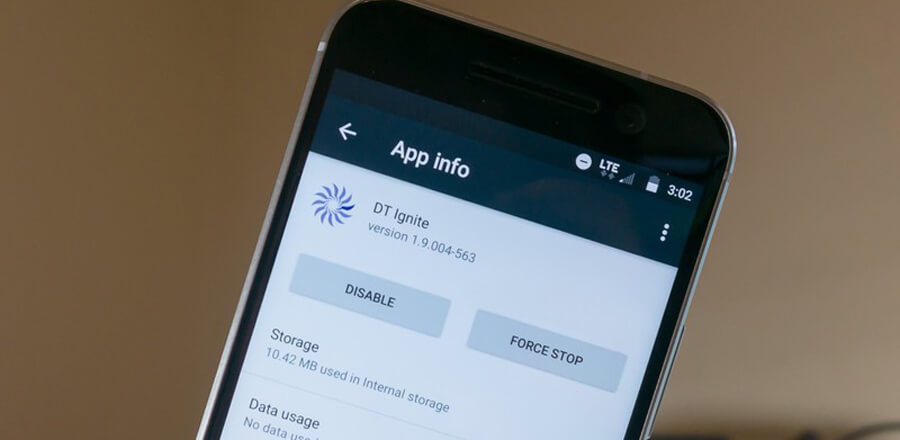
DT is Digital Turbine, meaning the application is written in carrier bloatware called DT Ignite, which preloads other apps into the phone. It's a typical app, and users won't install it because it can consume significant storage and data.
DT Ignite is the app used to install other applications on a carrier-branded phone. It is associated with several carriers, including AT&T, Mobile, Verizon, Vodafone, US Cellular, and Cloudphone.
There are certain versions of the HTC 10 update bugs which can affect functions like
-
Re-enable itself after an update; the user may need to disable it again.
-
It disappears from the App Manager after the update and may not appear in the system apps.
-
It runs intermittently in the background, even after being turned off, and can persist after an update.
-
Some users may encounter bugs on their mobile devices that cause the program's behaviour to be abnormal, and troubleshooting may be required after each update or after a phone reset.
-
DT may start disabling and uninstalling functions.
The user should be aware of such settings when setting up the phone for the first time and after the factory reset. In addition, such programs on mobile phones may send spam notifications with ads.
 How Do I Remove The Mobile Service Manager?
Most such programs come preinstalled. It was previously available on the Google Play Store but was removed by Google as part of a cleanup. It was detected to be collecting user data and hosting malware.
Such bloatware causes spamming and undue interference on Android devices. It comes preinstalled on most carriers, especially Verizon, the US's largest wireless carrier.
The DT Ignite app has utilities for emails, pop-up messages, ad campaigns, and phone notifications. It can even push and recommend other apps to be installed on Android phones while using the phone's data.
However, removing such apps can be frustrating and difficult, as they reappear after a restart.
How To Slow the Mobile Services Manager Down?
Users dislike the mobile services manager because it uses up the monthly data allotment without notification and sends spam notifications with ads in certain apps.
During setup, the user is asked to allow the app to access the system and personal files. If the user agrees, the app allows the system to run in the background even when it is disabled. It can also install useless programs on the device without the user's permission.
One cannot completely uninstall the program, as it is part of the firmware and can only be temporarily turned off. This prevents it from displaying ads at any time, but even when disabled, it still runs in the background.
 Why would carriers allow the Mobile Services Manager?
Some believe service providers intentionally install such apps on mobile devices to collect customer data, which can be used to track user behaviour and increase data charges on the customer's phone bill.
The data carrier may install it on the user's device to target subscribers for monetisation. However, many users believe such systems install apps without permission, and there should be a mechanism to disable or eliminate them.
One can disable the mobile services manager during new device setup, as such apps have many drawbacks, including unrestricted access to private information and constant background activity.
But even when you turn it off and reset the device, it still performs a factory reset and loads the basic settings. No matter how long one scans the device, it may be challenging to disable it. The software creator benefits from it, and antivirus and anti-malware software employ its services.
Is DT Ignite Bad?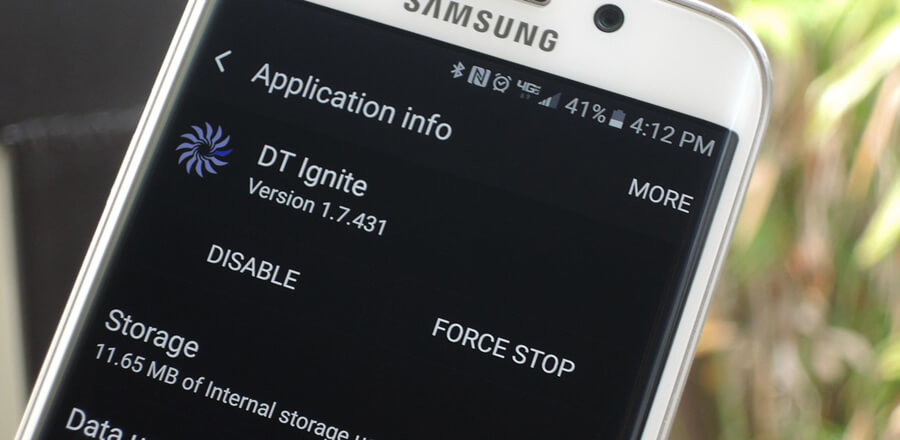
DT Ignite is the system process that runs in the background, allowing other carriers to install sponsors' apps and advertise on the carrier's phone without permission.
-
It integrates the Ad and Mobile application platforms to deliver a technologically advanced solution for advertising and mobile delivery.
-
The advertising platform was developed to reach more customers through app developer ads.
-
It lasts for the device's lifespan. The DT technology bridges advertisers and app developers with the world's customers. In addition, it installs apps directly on the device rather than in local app stores.
-
The mobile delivery platform can increase its revenue share by using data to sponsor advertisements. Carriers advertise directly via phone, pop-up messages, emails, and notifications.
-
It operates in the background, more like spamming the phone with advertisements, silently loading the carrier's app, and installing apps without notifying the device's owners.
-
The mobile services manager also acts as a monitoring tool and collects extensive data on the phone without the user's consent or even their knowledge. As a result, it increases the overall data usage bill.
-
It is bloatware: a program that slows the system, consumes significant device memory, and requires substantial processing power. Moreover, the hardware requirements for running it are higher than those of previous app versions, as it introduces new versions with cosmetic improvements.
-
It is very efficient at the preloading and post-loading phases, and its ultimate goal is to increase the service provider's ad revenue by installing irrelevant apps on customers' devices without their knowledge, permission, or consent.
-
Such an app may not uninstall completely because, each time the phone is restarted, the app is loaded again, which bloats the customer's data usage bill.
Verizon introduced the latest DT Ignite mobile services manager, who said that users who have already taken S7 might only get it with their permission. The software will remain active during the initial setup on a new device unless the device undergoes a factory reset.
The software will not be installed or run in the background without users' permission. The latest version will be removable and can be uninstalled at any time.
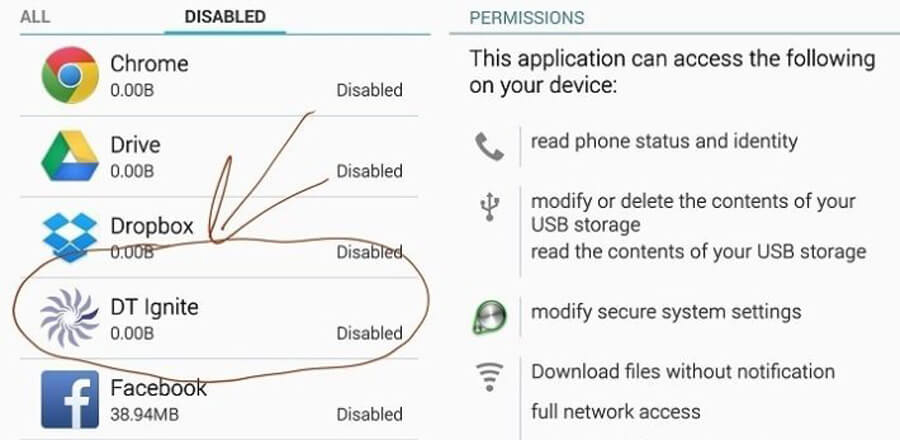 Should We Use DT Ignite?
Several users have reported that such services consume significant power and data on devices as they connect and interfere with system functions without user authorisation.
-
Data usage is metered, even with unlimited data plans, and there may be roaming limits and a maximum load before data speeds are reduced or throttled.
-
It can be a problem when the device is not connected to Wi-Fi.
-
It uses data without the user's knowledge, and no settings can limit it from interfering with the device's functions.
-
It slows down processes because ads may appear in the middle of work, disrupting the user.
It drains battery power and processing resources, slowing down the Android device.
What is the Mobile Services App?
Depending on your phone, the software can be found under Settings > Apps > Application Manager. It can also be found under "System apps" or "Installed apps."
If you can't find it, tap the three dots in the top-right corner of your smartphone's screen to access the system files. Then, you can uninstall it to prevent it from accessing personal files.