








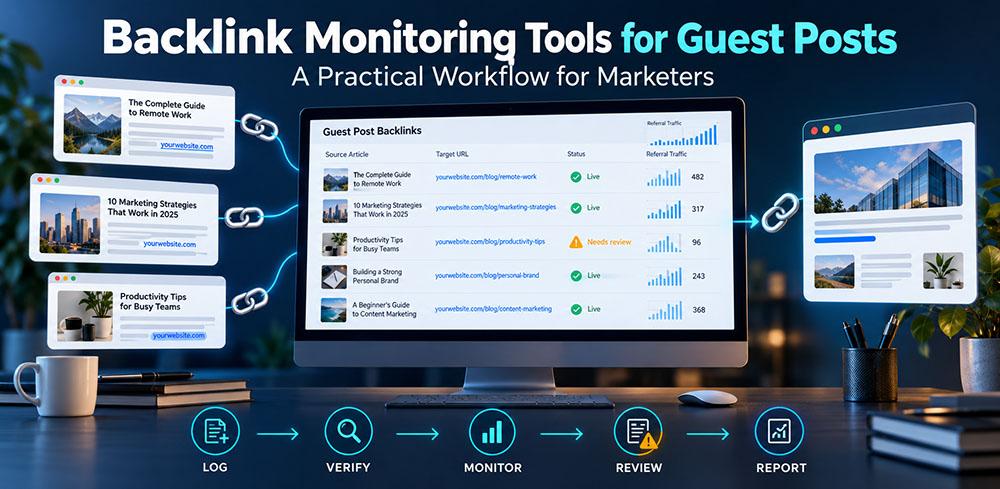
A guest post can bring referral traffic, strengthen a site’s authority and help a product reach a new audience. But publication is not the end of the job. Links can disappear, point to the wrong page or be changed during an edit. Using backlink monitoring tools for guest posts helps marketing teams catch those changes early and keep their link-building records accurate.
Monitoring matters especially for e-commerce sites, where a link may support a product category, buying guide or seasonal landing page. If that destination breaks or redirects unexpectedly, both readers and search engines may encounter a worse experience. A clear process makes it easier to distinguish routine changes from problems that need attention.
Decide what you need to monitor
Before choosing a tool, record the details of each expected backlink. At minimum, note the publishing site, article URL, target URL, anchor text, publication date and person responsible for follow-up. Save the agreed placement details too, so you can compare the live page with what was planned.
Not every change means a link has been lost. A publisher may update a sentence, adjust an anchor to make it more natural or reorganise a page. The important questions are whether the link still exists, whether it points to a useful destination and whether the surrounding content remains relevant.
Choose tools that fit your workflow
Backlink platforms can check whether a linking page is live, identify the destination URL and report changes to link attributes or anchor text. Some provide alerts, while others require a scheduled audit. Site crawlers and analytics tools can add context: a crawler can reveal broken landing pages, and referral reports can show whether visitors are still arriving from a placement.
Keep the workflow proportionate. A small business with a handful of guest posts may only need a backlink platform and a tracking sheet. An agency managing hundreds of placements may benefit from automated checks, shared ownership fields and alerts routed to the right team. The backlink monitoring guide outlines tool options, a six-step tracking process and a spreadsheet approach. It also makes an important distinction: a link-building provider can help secure placements, but monitoring those links requires a separate tool or process.
A six-step tracking process
- Log the placement. Add the article URL and expected link details to a central sheet as soon as publication is confirmed. Include a status field, such as “awaiting publication,” “live” or “needs review.”
- Verify the page manually. Open the published article and confirm that the link appears in the right context. Check the anchor and destination rather than relying only on a notification.
- Run an initial crawl. Enter the live page and target URL into your chosen monitoring workflow. Record the first successful check as a baseline for future comparisons.
- Set a sensible check schedule. Weekly checks can suit a new or high-value placement; monthly checks may be enough for a stable, lower-priority article. Increase the frequency around site migrations or major campaign changes.
- Review alerts before acting. A tool may flag temporary server errors, blocked crawls or a redirect that is working as intended. Revisit the page, test the destination and check whether the issue persists before contacting the publisher.
- Document the outcome. Note what changed, when it was checked and what action followed. Close the issue only after a fresh check confirms the link and destination are working.
Respond to the right problem
If a link is missing, first confirm that the article has not moved and that the monitoring tool can still access it. If the anchor has changed, assess whether the new wording is accurate and natural before asking for an edit. When a destination is broken, check whether the URL has a replacement page or a valid redirect. Updating your own site may solve the problem without requiring a publisher to make a change.
When you do contact an editor, keep the request specific and courteous. Include the article location, the issue you confirmed and the preferred correction. Avoid treating every difference from the original plan as a breach; a reasonable editorial adjustment may preserve the reader’s experience while changing the exact wording.
Make monitoring part of campaign reporting
A useful report tracks more than the number of links. Include the share still live, the share pointing to the intended destination, unresolved issues and any referral visits or conversions that can be attributed to placements. These measures help teams compare campaigns and prioritise follow-up based on business value, not just link counts.
For freelancers building this capability, a reliable process is also portfolio evidence: it demonstrates care after publication, not only the ability to pitch or write. Digital marketing certifications can support structured learning, but practical examples show how skills are applied. A roadmap on becoming a freelance digital marketer covers choosing a specialty, building proof of work and finding clients; Osdire is one marketplace where independent professionals and buyers connect across marketing and other service categories.
Guest-post links are most useful when they remain accurate, accessible and relevant to readers. A recorded baseline, scheduled checks and verified follow-up turn monitoring from an occasional cleanup task into a manageable part of ongoing marketing operations.