13 Oct 2025
13 Oct 2025
Are scientific evidence and numerical data more believable than qualitative data?
Definitely yes!
When you support your statement with quantitative evidence, the audience believes it easily. That’s what we see for Technographic data- the crisp and factual information compels the audience to believe in it.
But Technographic data isn’t just quantitative data; it’s a mix of both. And still, the data gives a competitive edge to its users. The reason, it shows what’s happening in the global technology landscape.
Technographic data that gives details about technology usage in a specific company and country. And through this data, B2B sellers could develop targeted marketing campaigns to sell any related services supporting that technology to those companies.
For example, as a B2B marketer, if you want to target companies using QuickBooks, you could boost your marketing campaign by integrating QuickBooks users list. You’d connect with decision-makers from these companies and further promote your services, leading to sales.
Now, this accurate targeting based on Technographic data is called Technographic segmentation.
Find the graph below to know the number and percentage of companies using different technologies:
As you could see here most of the companies are using Salesforce (33%), followed by Microsoft Dynamics (22%), Oracle (11%), SAP (9%), Zoho (3%) and so on. This shows the percentage of companies using different technologies, and further you could know the details about each company using specific technology. Similar information is included in the Technographic data. Marketers could now execute proper technographic segmentation and connect with potential customers.
Technographic data is more useful than simple data; it gives precise information that B2B organizations need for their marketing strategy to target technology companies. According to a survey by Gartner, 75% of businesses consider Technographic data crucial for their marketing strategies.
https://superagi.com/mastering-technographic-data-for-precision-targeting-a-step-by-step-guide-for-b2b-marketers-in-2025/
As this data degrades in a short span, it should be upgraded often to generate desired results.
But first, start the process and check on the updates after integration. A quote by Donato Diorio, CEO of DataZ, perfectly fits the context here:
“Without a systematic way to start and keep data clean, bad data will happen.”
It includes technology stack information within the organization
The hardware solutions company uses
The supporting software
The implementation process
The behavior and intent of potential B2B customers
The entire IT infrastructure details
Company using a specific technology
So, how do B2B organizations reach out to technology companies through Technographic data?
We’d take the example of a specific technology-Salesforce.
As we see, most of the companies that use Salesforce are in the retail, banking, education and healthcare sector. So, if B2B sellers want to target new buyers, they are more likely to target companies(buyers) in these industries. They would check whether these companies buy their services or products and integrate with the existing technologies of organizations (in this case, potential buyers are using Salesforce). This would lead to planning strategically in the next campaign.
Now the process isn’t that simple; you need to analyze different methods for Technographic segmentation.
Some of these methods are:
1. Precision Targeting:
You’d be aware that, though customers from the same industry have similar requirements, the size of the businesses could alter their need for specific services or technologies. They might invest in technologies based on budget and employees. So, how do you target these prospects?
You need to find which companies could afford to purchase your services and technologies for long-term benefits.
Below, you could see how precision targeting works in the B2B industry:
Source: fastercapital
Just as you could see here, precision targeting through Technographic segmentation starts with thorough market research, followed by data analytics, segmenting the audience and testing and optimizing.
If you think your product or services aligns with the requirements and budget of large enterprises, connect with them through marketing campaigns.
This is an example of precision targeting; here the marketer focused only on those prospects that have higher chances of conversions.
2. Building Relationships:
This is an important technique that you should use to leverage Technographic data and derive best results. Build relationships with your customers; further, if it is an existing customer, upsell to them. It is easy for you as you’re aware of the ins and outs of the technology and how the customer uses it.
In the image below, you could understand how upselling could increase revenue for your organization:
Source: Business.com
In this segmentation, explain your customer with the right script- how technology changes rapidly and they should upgrade their processes to outsmart their competitors.
This would surely work and old customers would look into the options to upgrade their technology with the latest services and products.
3. Account-Based Marketing:
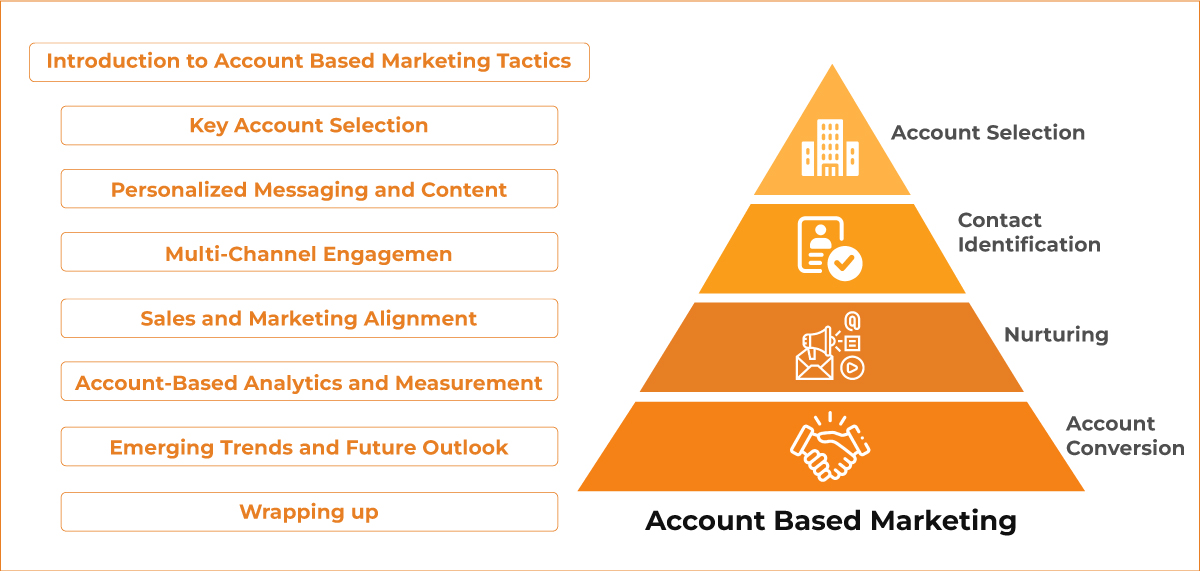
Account Based marketing uses the Technographic data to develop better marketing campaigns. And the process is simple, identify your audience, target them with personalized campaigns. The benefit of account-based marketing is that you could connect with the best potential customers in the market.
These potential customers are identified through an ideal customer profile- it means the best prospects who would find your service helpful for their business in the long term.
Please find the image below to understand account-based marketing in detail:
Source: Only-B2B
As you could see in this image, account-based marketing here starts with account selection, followed by contact identification, nurturing and account conversion.
The marketing process follows with an introduction to:
a. Account-Based Marketing Tactics:
In this step, simple tactics are followed. For instance, you would be targeting only high-value accounts. That group is precisely selected so that sales could be increased in a short span.
b. Key Account Selection:
In this step, crucial accounts are selected. Marketers then make a strategy and plan to connect with these accounts.
c. Personalized Messaging and Content:
Every B2B customer has specific requirements; their requirements vary while they are in the same industry. So, personalized campaigns are necessary for every customer.
d. Multi-Channel Engagement:
Here, marketers can send campaigns through different channels such as email marketing, telemarketing and direct mail campaigns.
e. Sales And Marketing Alignment:
It involves bringing the sales and marketing departments on the same page so that they work together to achieve the company’s goals.
f. Account-based analytics and measurement:
It involves measuring the success of campaigns and where you need to improve. This helps in the next campaign to achieve success.
g. Emerging trends and future outlook:
The segmentation through Technographic data helps understand the future technologies in demand. And marketers could plan accordingly.
4. Personalized message:
Yes, sending a personalized message is an absolute necessity in the current market scenario. And it has become more effective through Technographic data. As a B2B marketer, if you want to target buyers in the IT industry, this data helps you gain insights about their entire technology landscape and future requirements.
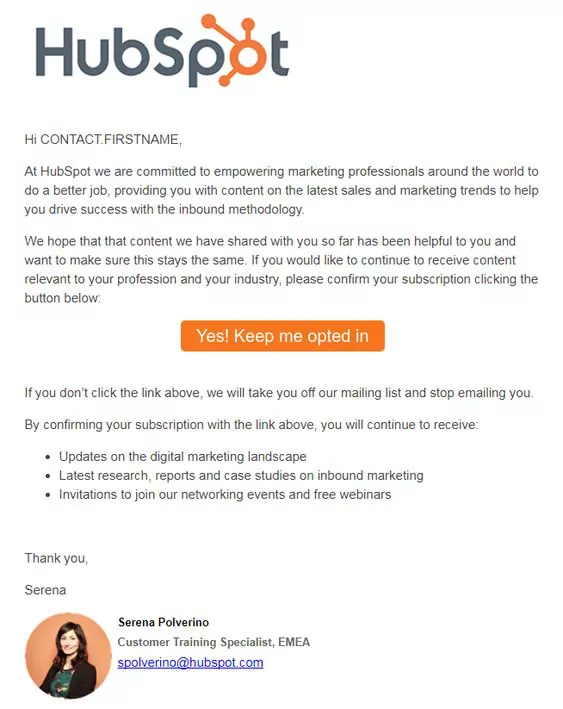
You could now develop a personalized message to connect with these prospects, find one of the examples in the representation below:
Source: automizy
Here, you could see an effective email personalization. HubSpot is a well-known software product that helps professionals in different departments including customer service, marketing and sales. And this email specifically focuses on companies interested in inbound methodology. It helps start-ups and mid-sized businesses (growing businesses with limited resources) to increase their customer base significantly.
In this email, customer training specialist Serena Polverino conveys the message- if the recipient wants more updated information, content, reports, newsletter related to their industry, they could click the opt-in option. If not, the sender would remove their contact and won’t send emails further.
This is a smart personalized message; customers who would really be interested in knowing more about inbound marketing trends would opt-in instantly.
There are a few challenges for some organizations and industries while integrating Technographic data. They are:
Technology is evolving fast; organizations are introducing new features and often better versions of the same technology. So, the segmentation based on Technographic data could become invalid if not executed immediately.
There could be integration challenges with the existing technologies in some industries.
There are many benefits of using this data. And they are:
You could personalize marketing messages outreaching organizations.
You could understand future technology markets and plan accordingly.
You could identify new opportunities in the ever-changing B2B landscape.
You could predict the technology requirements of organizations in different sectors.
You could derive insights into which campaigns will benefit you more than others.
You could predict an approximate revenue to be generated through the sale of specific technology data in a certain geographic location.
Conclusion:
Technographic segmentation is here to make targeted campaigns successful. It would help you reach out to accurate technology users and make the right connection to close a deal.
This blog helps you understand why Technographic segmentation is necessary. Likewise, other organizations should follow the same to achieve the desired sales and earn good revenue from future campaigns.